A machine can finish the shift with a strong utilisation figure while the line misses its plan. Work may be waiting between operations, a downstream process may be constrained, or completed parts may require rework. Understanding useful output means connecting the equipment result with the flow around it.
IN BRIEF
- Read availability, performance and quality together.
- Keep job, process and loss context beside the number.
- Follow the response through to a comparable operating result.
Give OEE a clear meaning
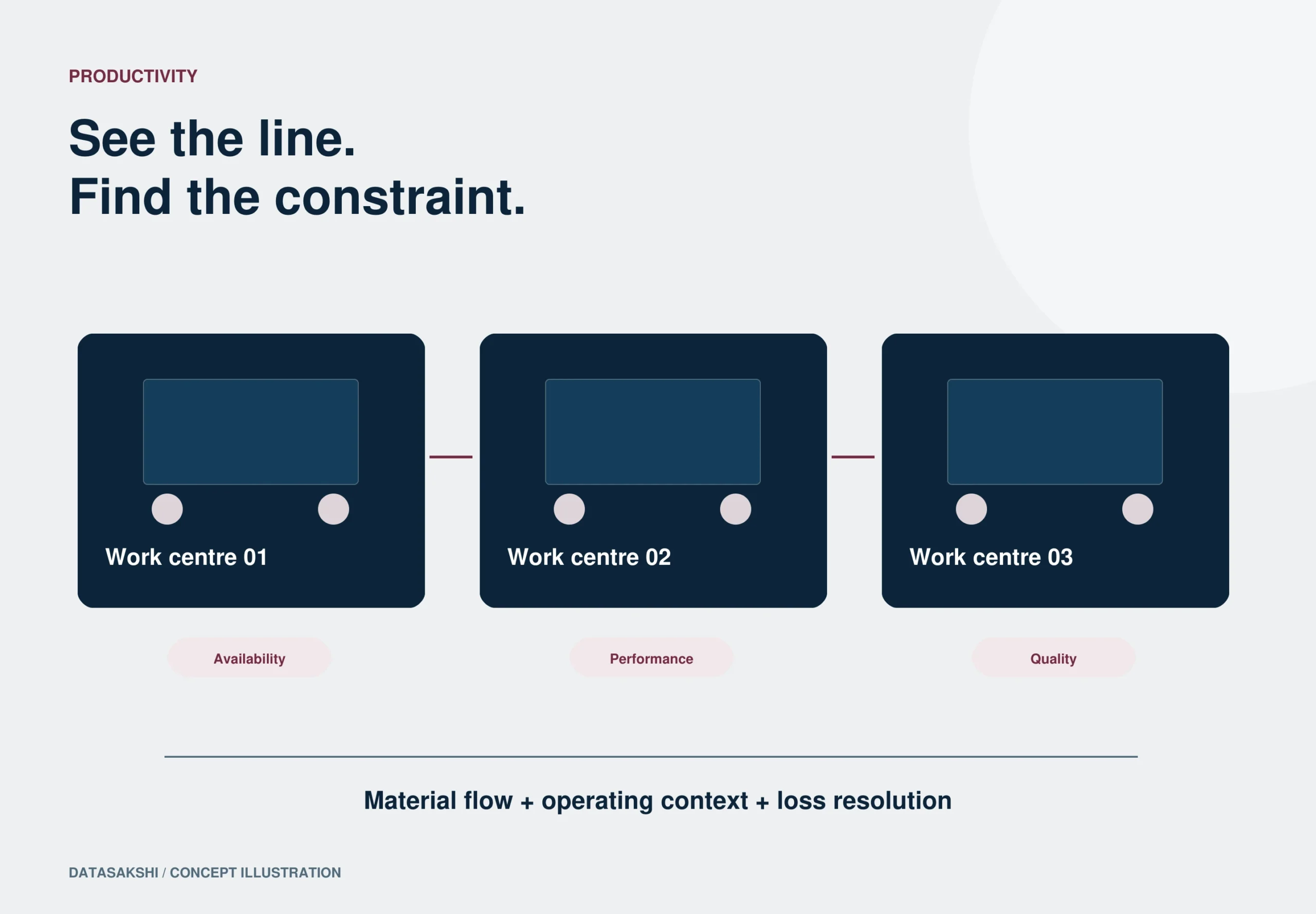
Overall equipment effectiveness (OEE) brings availability, performance and quality into one measure. Before comparing shifts, agree what counts as planned production time, the expected cycle and good output. If teams use different definitions, the review can become an argument about the number. Keep the three factors visible so a headline score does not hide the loss that needs attention.
StatPort’s Total Productivity material brings these factors alongside production trends and live line status. The useful question is not simply whether a score rose. Ask which part of the result changed and why. Availability loss, reduced running performance and rejected output call for different investigations. Keeping the components visible helps the production and quality teams discuss the same event rather than defend separate summaries.
Follow the line as well as the asset
Overall line effectiveness (OLE) widens the conversation to the connected operation. Ask where work accumulated, which process set the pace and whether material reached the next stage when needed. For example, a faster upstream operation may simply create a larger queue. Compare plan with actual progress across work centres, using job cards and route records to locate the constraint.
This is where plan-versus-actual visibility across locations, work centres and processes becomes relevant. The supplied platform description connects ERP plans, job cards and route cards with live constraints. A line review can therefore follow the order through its operations, not stop at the fastest machine. The operating objective is the required good output from the value stream, with attention directed to the step restricting it.
Give every recurring loss an identity
Record where the event occurred, which job was running and what interrupted the work. Equipment signals reveal part of that story; operator observations add conditions that a controller may not capture. Use consistent loss descriptions across shifts. The aim is enough evidence to investigate a repeated problem without asking the next team to reconstruct the event from memory.
A practical loss record can bring together the work centre, product or job, shift, time, observed interruption and responsible function. This is an editorial starting template, not a claim that every installation uses identical fields. Agree the language with operators before rollout. Otherwise, similar events may appear under different descriptions and the review will struggle to distinguish a recurring constraint from several unrelated problems.
Bring yield into the same review
Output can improve while material consumption or rework increases. Check material feeds, bill-of-material records and abnormal consumption alongside production and quality. StatPort’s Total Productivity approach connects these views with plan-versus-actual monitoring and cycle losses. Use the combined record to ask whether the line produced the required good output with the expected material, rather than reward a local speed increase.
The November brochure describes material-feed integration, bill-of-material checks with ERP and the identification of abnormal consumption. Those views should support the same production conversation. When a proposed speed increase changes the amount of scrap or material used, the gain needs to be considered with that consequence. A productivity dashboard is more useful when it makes these trade-offs visible instead of hiding them behind a single favourable indicator.
Finish with an owned investigation
Choose one recurring missed-plan question. Agree who will investigate it, what action is proposed and how the result will be checked. Compare similar products and operating conditions after the change; a different mix can distort the conclusion. A useful OEE review ends with a clearer explanation and a traceable response that the next shift can follow.
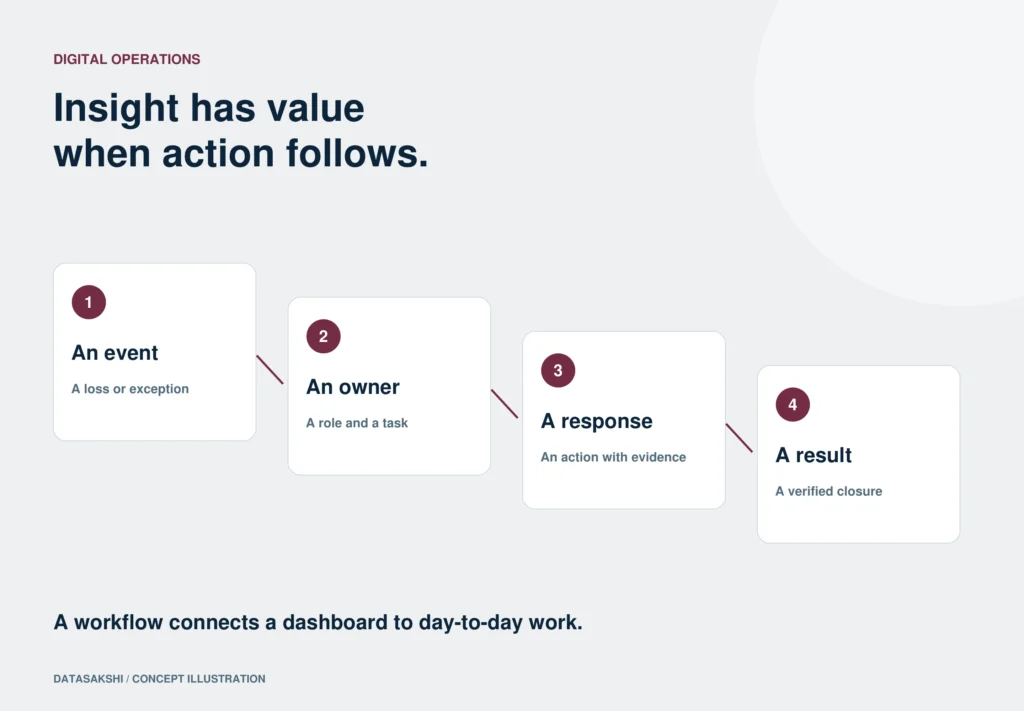
The StatPort presentation describes the response loop as tickets, targeted alerts, rule-based escalation and outcome monitoring. Use that sequence to give a recurring loss a clear owner and review point. Agree what constitutes an improved operating result before closing the task. This separates evidence that an action was performed from evidence that the constraint has actually been reduced.
ILLUSTRATIVE SHOP-FLOOR SCENARIO
A machining-line review, not a machine-speed contest
Consider an illustrative automotive-component line with machining followed by inspection and finishing. The machining operation appears busy, yet completed good parts remain below plan. A useful review compares work waiting between operations, quality holds, route progress and the timing of losses. It does not assume that the busiest machine is the process setting the pace.
The first action might be an investigation of an inspection queue rather than an instruction to run machining faster. The team can compare the next equivalent production run, retaining the product, shift and operating context. This example illustrates the review method; it is not a reported customer result or a forecast of improvement.
Bring these questions to the first review.
- Which line and product are we reviewing?
- Are availability, performance and quality defined consistently?
- Where did work wait or require rework?
- Who owns the selected loss and the next review?
Source notes & editorial boundaries
November capability brochure, page 6; November presentation, slides 6 and 8. Practical review questions and the machining example are editorial guidance, not measured customer evidence.
This article is prepared from DataSakshi’s supplied materials. Product statements retain their stated scope. Practical examples are illustrative, not customer testimonials or performance promises.