An Indian manufacturing plant may operate newer equipment beside machines that have served the line for years. Their data capabilities differ, but the integration plan can accommodate that difference. Begin with the operating question and the information each asset can provide, then select the connection method.
IN BRIEF
- Assess the asset before selecting the interface.
- Capture operating context as well as machine signals.
- Validate the complete path from source to decision.
Make a source map for one process
List the machines, gauges and supporting systems involved in the first use case. For each source, record what information exists and how it can be accessed. StatPort’s integration approach distinguishes equipment with usable logs, systems needing standard adapters, assets requiring IoT hardware upgrades and older machines that begin with sensors or relays. Treat this as an assessment, rather than an assumption of universal compatibility.
The brochure’s four-generation framework is a useful conversation starter: Gen 4 equipment may provide usable logs; Gen 3 may use standard adapters; Gen 2 may need an IoT hardware upgrade; Gen 1 may begin with sensors and relays. These are assessment categories. They are not a promise that every machine will connect without checking its actual interfaces, operating condition and installation requirements.
Ask what the signal must explain
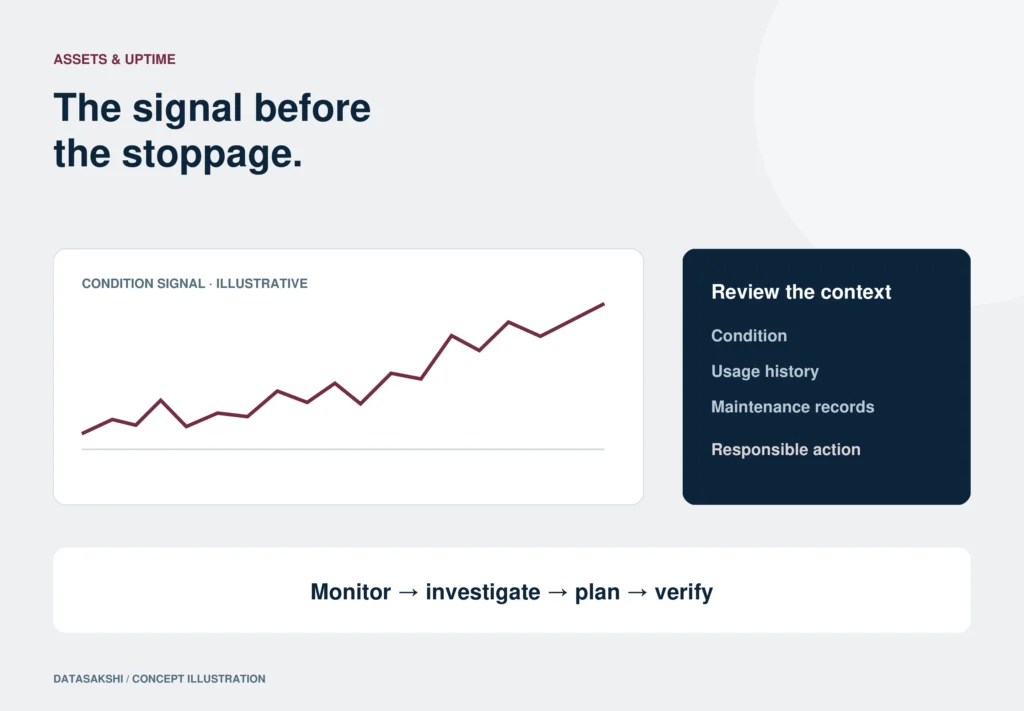
If the question is production loss, identify the evidence needed to distinguish running, waiting and interrupted work. If it is quality, determine which measurement and product reference matter. More tags do not automatically produce a better answer. Include the context held in job cards, ERP records and operator observations, especially where a machine cannot identify the work being performed.
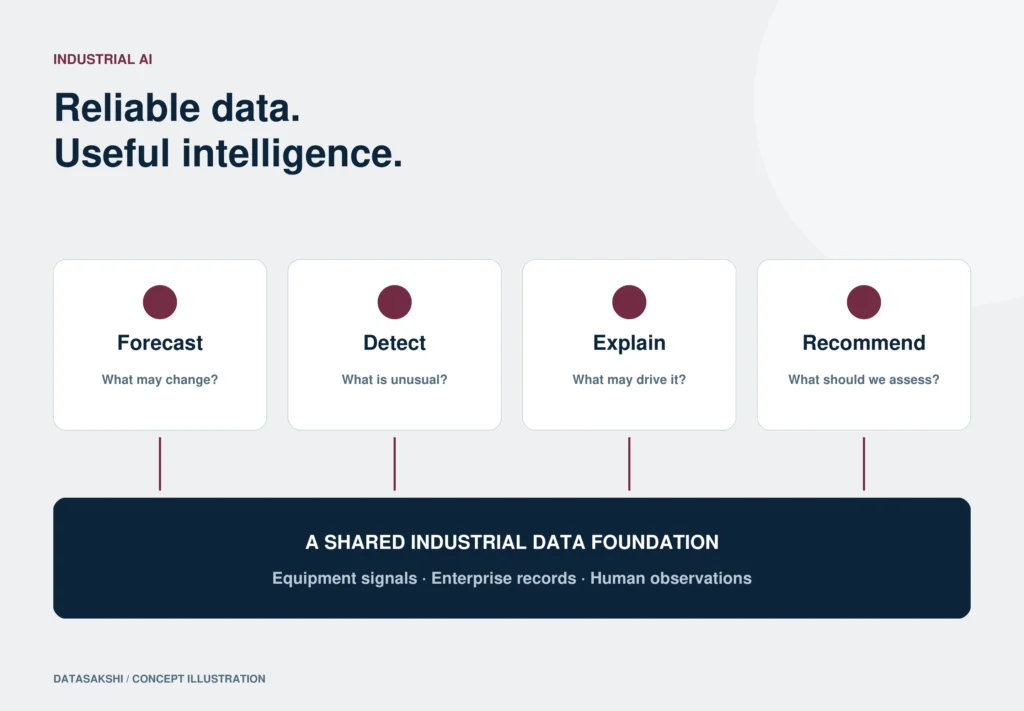
The supplied architecture covers CNC, PLC–SCADA, historians, measurement systems, sensors, drives, RFID, BLE and ERP. Its broad scope is important, but the first project should still be specific. Identify the information that answers the chosen question. Collecting more signals than the operating team can use can complicate the initial investigation without making the first decision clearer.
Give the industrial edge a defined role
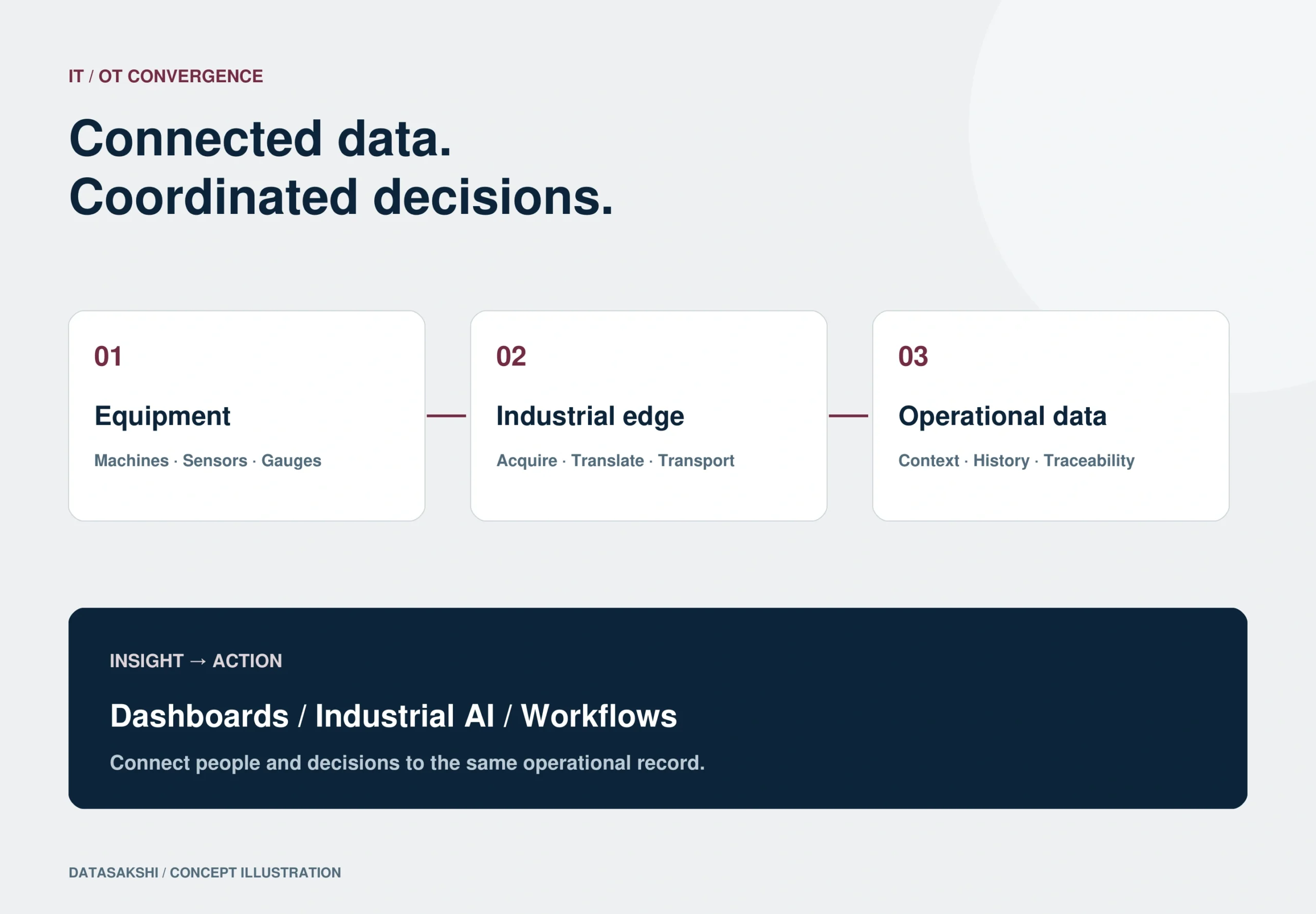
The edge sits between equipment sources and the services using their data. It acquires records, parses the incoming payload and translates information into a useful structure. Equipment categories and communication protocols are different things: knowing that a machine has a PLC does not establish which interface is available. Confirm the controller, accessible data and connection requirements for the actual asset.
Digital records and apps provide the human side of convergence. A machine signal may show an event, while the job card, product variant, material context or operator note explains what was happening. Preserve that relationship rather than treating every source as a separate dashboard. StatPort’s roadmap explicitly includes paperless digitalisation as well as IoT integration; the two streams support each other.
Design the route beyond the machine
Decide where each record will go and how it will be used. The path may connect edge services, industrial data storage, dashboards, enterprise information and workflows. Include network boundaries and IT–OT separation, where business systems and operational equipment remain distinct within the integration design. Review the route with the teams responsible for the plant network and the application.
The industrial-data material describes edge acquisition, parsing, transport, data services, big-data logs and OLAP. It also identifies edge and network monitoring and separation between IT and OT. A project discussion should follow that full route with the relevant engineering and IT teams. Connectivity is not permission to change machine controls, network protections or production procedures without the responsible owner’s agreement.
Prove one useful application
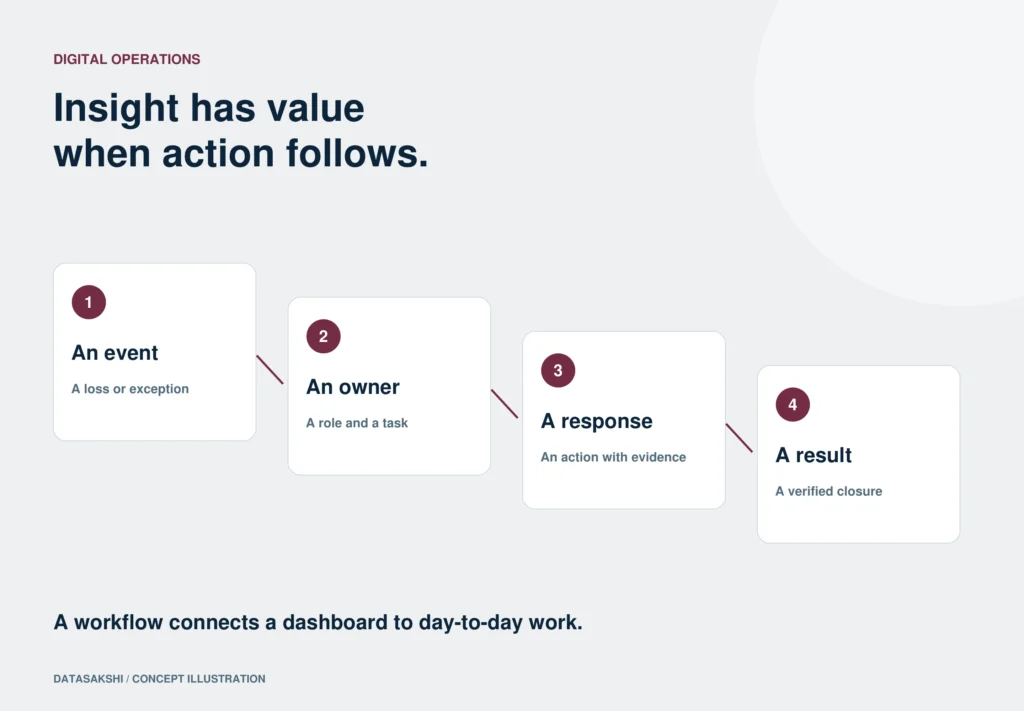
For the first process, demonstrate capture, interpretation and response together. Can the team relate the event to the correct job? Does the information explain the loss or support the inspection? Can someone act on it? StatPort connects mixed-generation equipment through an industrial data foundation. Expand after the first application shows that the information is dependable and useful in the operating routine.
The presentation recommends assessment, proving on one line and then scaling. Use the first line to test source quality, context, visibility and the response workflow together. An equipment connection is useful when the person receiving the information can explain and act on it. Only then decide which neighbouring assets, processes or plants should join the same approach.
ILLUSTRATIVE SHOP-FLOOR SCENARIO
One line, several generations of equipment
Imagine an illustrative supplier line containing a newer CNC, an older standalone machine, a connected gauge and a manual inspection step. The integration plan does not need to force all four into the same interface. It can assess the CNC logs, the older asset’s available signals, the gauge output and a suitable digital record for the manual check.
The shared question could be where a particular job loses time between machining and inspection. That question gives the sources a common purpose. It also makes the limits visible: a missing reason code or an unrecorded manual hold may matter more than another machine tag. This is a planning example, not a compatibility certification for specific equipment.
Bring these questions to the first review.
- What decision should the first connection support?
- What does each machine or instrument actually expose?
- Which human or ERP context must accompany the signal?
- Who owns the interface, network and operating validation?
Source notes & editorial boundaries
November capability brochure, pages 3–4; November presentation, slides 7, 17 and 22. Mixed-equipment examples are editorial illustrations, not specific installation claims.
This article is prepared from DataSakshi’s supplied materials. Product statements retain their stated scope. Practical examples are illustrative, not customer testimonials or performance promises.