An industrial-AI demonstration can show a forecast or flag an unusual pattern. A useful pilot must answer a harder question: does the result help the team make a better operating decision? That depends on the records beneath the model and the process around the person who receives its output.
IN BRIEF
- Choose the decision before choosing the model.
- Connect equipment, enterprise and human context.
- Evaluate analytical usefulness and the resulting workload.
Define one question the team can act on
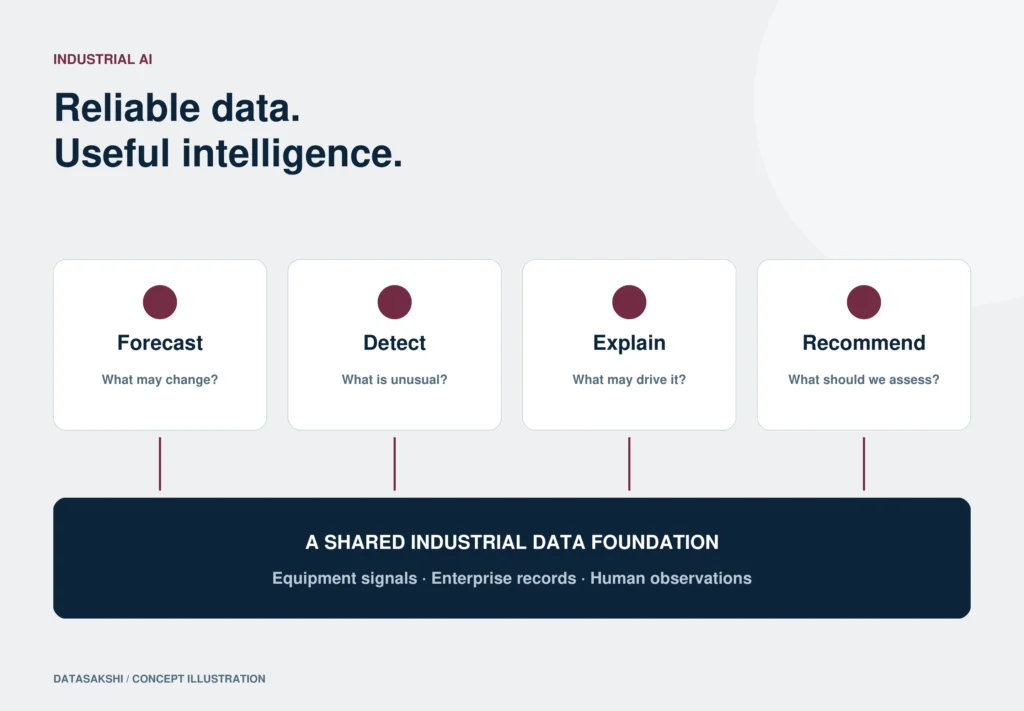
Forecasting, anomaly detection and root-cause analysis serve different purposes. Choose a specific question, such as which recurring downtime pattern deserves investigation. Identify who will use the output and what response is possible. Agree how the pilot will be assessed before reviewing a promising chart, so expectations follow the operating need rather than the appearance of the demonstration.
The client’s materials distinguish four capabilities. Stat II brings intelligence and insights into performance review. Stat GPT supports questions in plain language over connected industrial and enterprise data. Stat AI covers forecasting, anomaly detection and causal or prescriptive analysis. Stat Smith is presented as coordinated industrial agents. Treat these as different ways of working with the foundation, not as interchangeable labels for a single automatic answer.
Bring IT and OT context together
Operational technology (OT) provides equipment signals; information technology (IT) holds business and human records. A useful industrial record connects them. A temperature or cycle event may need a product, job, asset state or maintenance reference before it can be interpreted. Map those relationships and identify gaps. Combining files alone does not ensure the observations describe the same event.
The supplied architecture moves from industrial edge acquisition and paperless records to IT–OT convergence, then to analytical and AI layers. That sequence helps explain why the first job is often data work. A downtime event without the asset, operation or intervention history may be difficult to interpret. The objective is a connected record that an engineer can examine, rather than an unexplained volume of information.
Check what the history represents
Review missing records, changed measurement methods and the operating conditions covered by the data. Ask whether the history includes the states that matter to the question. Preserve source, time and descriptive context so an unusual result can be investigated. This groundwork also helps distinguish a change in the process from a change in how information was recorded.
The Stat AI screens show model comparisons, anomaly-method agreement, a risk calendar and root-cause views. They are useful evidence of the product’s analytical presentation. They do not, by themselves, establish accuracy for a different plant or prove that a suggested cause is correct. Evaluate the output against the particular use case and preserve the conditions under which the pilot has been assessed.
Test the output within the routine
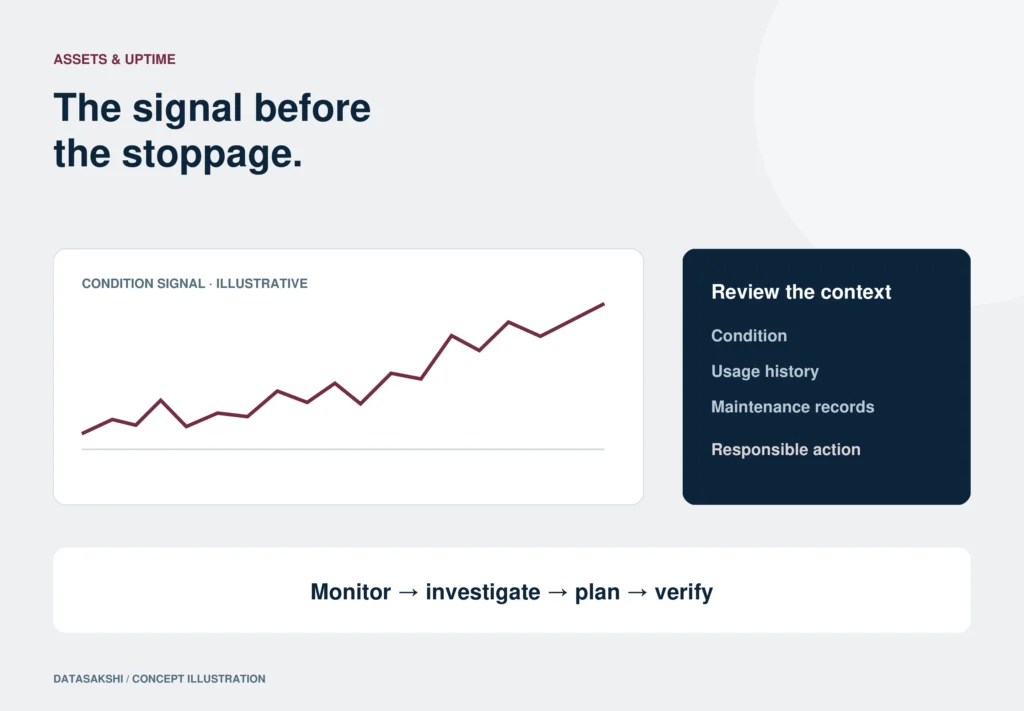
Decide who reviews a signal, which supporting evidence they need and how they record the finding. Track useful warnings, missed issues and enquiries that create work without helping a decision. Where a forecast includes a confidence view, include it in the review. A model result becomes operationally valuable when the team can interpret it and respond within the available time.
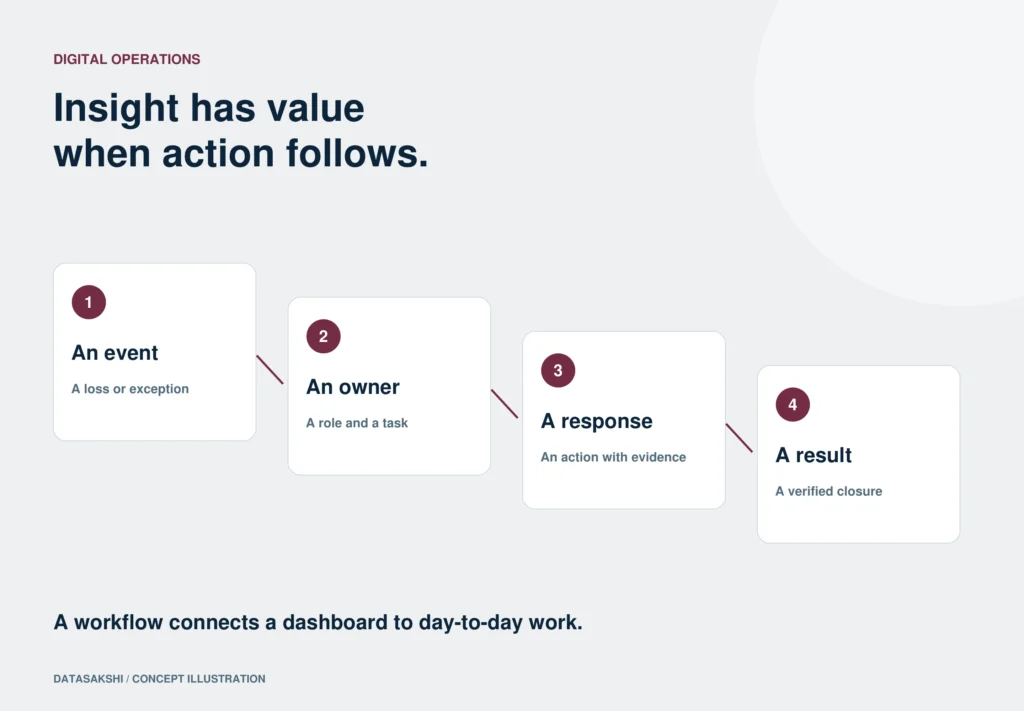
Make the human response visible. A forecast might prompt a maintenance review; an anomaly might lead to checking the source record; a root-cause view might organise an engineer’s investigation. Decide how that judgement is captured. Without this step, a technically interesting output can become one more screen that the operating team must monitor without a clear responsibility or next action.
Extend from the evidence of the pilot
Stat AI is positioned as pilot-ready for forecasting, prediction, anomaly detection and causal or prescriptive analysis. Stat II supports performance review; Stat GPT adds pilot-ready conversational access. Their starting point is the converged StatPort data foundation. Build one focused application, assess it with the people who use the result and let that evidence determine the next scope.
The presentation’s architecture appendix labels Industrial AI as pilot-ready. That qualification should remain visible when discussing deployment. The initial assessment should identify scope, data availability and success measures. Expansion should follow the evidence from that defined application, not assume that a useful forecast on one line automatically validates another product, machine population or operating regime.
ILLUSTRATIVE SHOP-FLOOR SCENARIO
A downtime question with a defined owner
Consider an illustrative pilot asking which line needs a closer downtime review over an agreed planning period. Production events, asset references, maintenance actions and relevant operating context form the starting record. The maintenance planner examines the forecast or risk signal with the underlying history, then records whether it led to a useful inspection, a planning change or no action.
The review should retain unhelpful signals as well as useful ones. That makes it possible to discuss the effort required to use the system, not only the most persuasive chart. This is an example of pilot design; no forecast accuracy, downtime reduction or financial return is being asserted.
Bring these questions to the first review.
- Which operating decision will this pilot support?
- Who owns the source records and missing context?
- How will an output be checked and acted on?
- What evidence would justify extending the pilot?
Source notes & editorial boundaries
November capability brochure, pages 3–4, 9 and 11; November presentation, slides 11, 19 and 21–22. Pilot-review suggestions and the scenario are editorial guidance.
This article is prepared from DataSakshi’s supplied materials. Product statements retain their stated scope. Practical examples are illustrative, not customer testimonials or performance promises.